Are You a Candidate for Lakewood Tooth Implants?
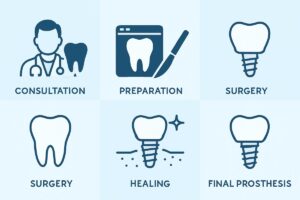
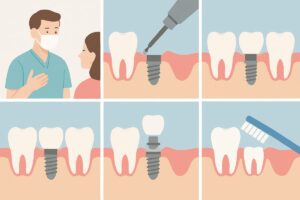
Lakewood tooth implants can restore chewing, speech, and confidence, but not every mouth is ready right away. This brief evaluation outlines the key factors to consider when evaluating candidacy, so you know what to expect. A comprehensive review examines oral health, bone support, medical history, and digital imaging to create a safe and predictable plan tailored to your specific needs.
Basic clinical checklist
Current oral health: Active gum disease or mouth infections raise the risk of implant failure. We look for healthy gums and control any infection before placing Lakewood tooth implants. Treating periodontal disease first improves long-term success.
Bone volume and density: Enough jawbone is needed to hold an implant. If the bone is thin or low, we may recommend grafting or a different implant approach. Adequate bone gives the best chance for durable Lakewood tooth implants.
Tooth loss history: The duration of tooth loss matters. Long-standing gaps often mean more bone shrinkage or shifting of nearby teeth. Early planning can simplify treatment; longer delays may require prep work before Lakewood tooth implants.
Medical and lifestyle factors
Smoking, uncontrolled diabetes, certain prescription drugs, and prior head or neck radiation can lower implant success. We review your health history and may coordinate care with your physician to reduce risks. Quitting smoking and controlling medical conditions improve outcomes for Lakewood tooth implants.
Age considerations: Adults of most ages can receive implants, provided they are in good overall health and have sufficient bone density. There’s no upper age cutoff—functional health and healing ability are the main factors when planning Lakewood tooth implants.
Diagnostic steps to confirm candidacy
We begin with a clinical exam and digital scans of your teeth and bite. A 3D CBCT image reveals bone height, nerve locations, and sinus position—critical information for safe Lakewood tooth implant planning. These tools let us design implants that fit your anatomy precisely.
If necessary, we develop a multidisciplinary plan that may include periodontal treatment, bone grafting, or medical clearance. Complex cases may also use guided surgery and surgeon-led prosthetic workflow to coordinate implant placement and the final restoration.
Possible preparatory treatments
Some patients need preparatory care before implants. Common steps include extractions of failing teeth, bone grafting to rebuild jaw support, sinus lifts for upper back teeth, and periodontal therapy to treat gum disease. Each step improves the chance your Lakewood tooth implants will last.
Next steps / CTA
To find out if you qualify for Lakewood tooth implants, schedule a consultation. We offer an initial exam and diagnostic imaging to evaluate your needs and review a personalized treatment plan. Call or request an appointment to start the evaluation and learn your options.
How Our In‑House Lab Improves Your Lakewood Tooth Implants
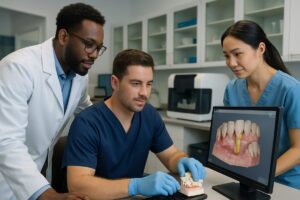
Having a fully functioning on-site lab changes the implant experience. For patients receiving Lakewood tooth implants, in-house milling and 3D printing enable us to control timing, quality, and fit from start to finish. That vertical workflow shortens treatment time and reduces the risk of lab-related errors.
Faster turnaround and same-day provisional teeth
Digital scans are directly transferred to CAD design, then to our in-house mill or 3D printer to produce a temporary prosthesis. This workflow allows same-day provisional teeth when appropriate, so patients with Lakewood tooth implants often leave with a working smile that day instead of waiting weeks for lab work.
Better fit, fewer remakes
Milling and 3D printing onsite tighten quality control. Chairside adjustments are quicker, and lab handoffs are minimized—so restorations fit better on the first try. Fewer remakes mean fewer visits and a smoother process for your Lakewood tooth implants.
Material options and clinical oversight
Our lab fabricates durable zirconia and acrylic restorations, selecting materials based on function, aesthetic needs, and the clinical plan. Because the surgeon and restorative team oversee fabrication, the prosthesis matches the surgical plan and warranty protocols—helping ensure long-term success for Lakewood tooth implants.
Patient benefits
In-house fabrication delivers faster treatment, clearer communication, and more predictable esthetics. For patients, this means less time in treatment, a lower risk of errors, and restorations that match the surgical results. Our on-site lab also supports the center’s maintenance and warranty programs, which are tied to each implant case.