If you’re asking, “Are dental implants right for you?”, this guide will help you weigh the basics.
Dental implants replace tooth roots with a metal post (usually titanium) surgically placed in the jaw. A crown or prosthesis attaches to that post to restore chewing, speech, and appearance.
Below, we cover benefits, who makes a good candidate, the treatment steps, risks and costs, alternatives, questions to ask, and the next steps to take.
Key benefits of dental implants
Dental implants act and feel like natural teeth. They improve chewing and speech compared with loose dentures. Implants support the jawbone and help preserve facial structure by preventing bone loss.
They look natural and often provide a long-term solution with high success rates when placed and maintained correctly.
Who is a good candidate?
Oral health basics
Good candidates have healthy gums and enough jawbone to hold an implant. If the bone is thin, a bone graft can rebuild support. Untreated gum disease should be treated first to improve success.
Medical and lifestyle considerations
Controlled chronic conditions, like managed diabetes, usually aren’t a barrier. Non-smokers do better, and quitting smoking improves healing. Good daily oral hygiene and regular dental visits are important for long-term success.
When implants may not be the best option
Active, untreated gum disease, certain uncontrolled medical conditions, or a strong unwillingness to undergo minor surgery may make implants a poor choice. In those cases, other tooth-replacement options may fit better.
What the treatment pathway looks like
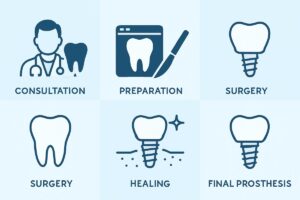
Consultation and planning
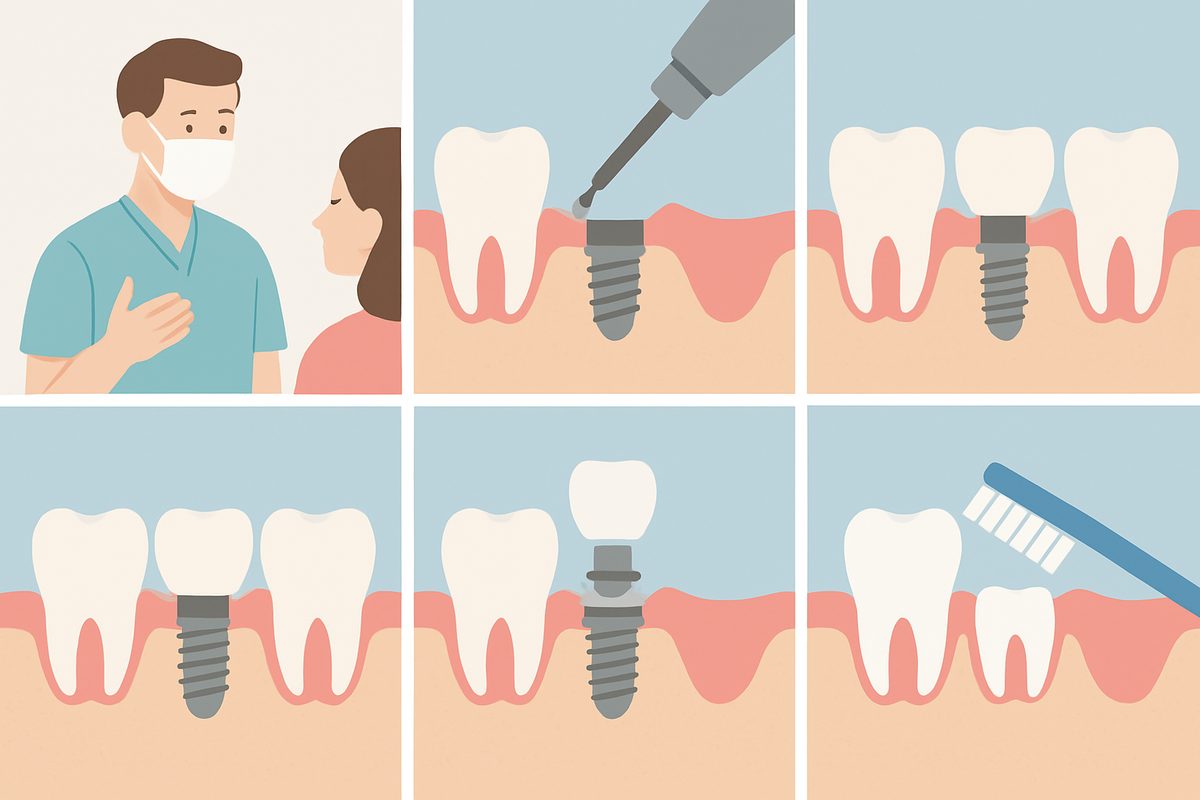
Your dentist or specialist will do an exam and take X-rays or a 3D CBCT scan. They’ll create a treatment plan and give a cost estimate and timeline based on how many implants you need and whether grafting is required.
Surgical steps
If a tooth must be removed, that happens first. Bone grafting, if needed, may be done at the same time or earlier. The implant is placed in the jaw. You’ll wait for osseointegration — the implant fusing to bone — before the final crown or prosthesis is attached.
Timelines for single vs. full-arch treatment
Single-tooth cases often take a few months from start to finish. Full-arch solutions can take longer, though some immediate-load options let you leave the clinic with temporary teeth the same day.
Risks, costs, and alternatives
Common risks
Risks include infection, implant failure, and possible nerve or sinus issues. Choosing a trained provider and following care instructions lowers these risks.
Cost considerations
Costs depend on the number of implants, the need for grafting, and the provider’s experience. Dental insurance may cover parts; many offices offer financing to spread payments.
Non-implant alternatives
Bridges, partials, and dentures are non-surgical options. They can be quicker or cheaper but may not preserve bone or feel as stable as implants.
Questions to ask your dentist or specialist
Ask about success rates for cases like yours, the clinician’s implant training and experience, whether you’ll need bone grafting, all costs and financing options, and the expected timeline and aftercare.
Next steps if you’re thinking, “Are dental implants right for you?”
Consider your oral health, medical history, budget, and desired timeline. Schedule a consultation with a qualified implant dentist or specialist to get a personalized plan and a clear cost estimate. A short exam and scan will answer most questions and help you decide the best path forward.